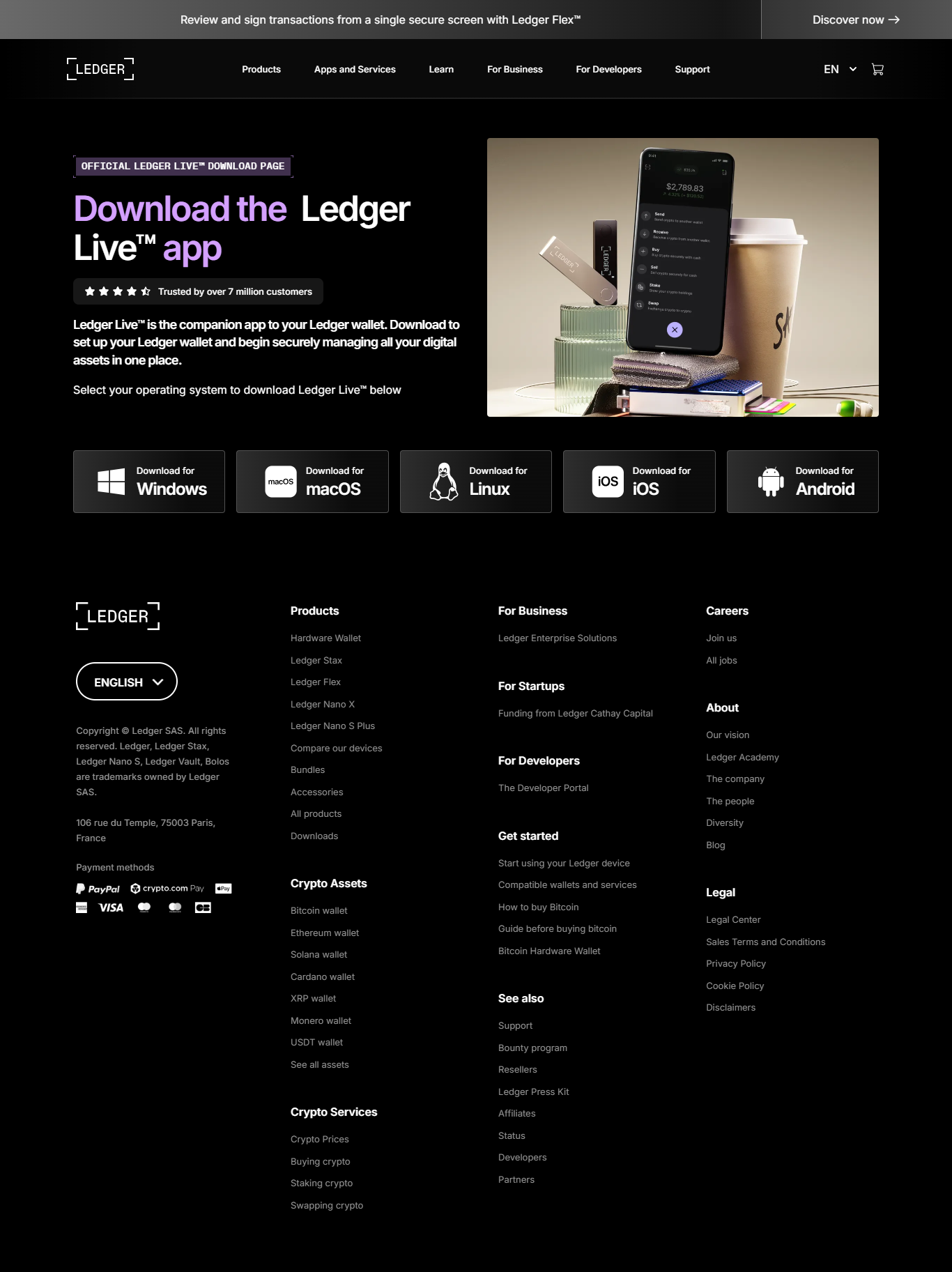
Ledger.com/Start — The Complete 2025 Crypto Security & Setup Guide
A master-level, beginner-friendly walkthrough of setting up your Ledger wallet through the official Ledger.com/Start portal — including security insights, Web3 explanations, and practical examples.
Why Ledger.com/Start Should Be Your First Stop
Cryptocurrency ownership is empowering — but only when done safely. The growing world of DeFi, NFTs, staking, and digital asset investing brings opportunities, but also risks such as phishing attacks, malware, fake wallet downloads, and identity theft.
**Ledger.com/Start** is the official onboarding portal created specifically to protect new and experienced users from these dangers. It ensures that your first steps with a Ledger device — whether Nano S Plus, Nano X, or Ledger Stax — start with authenticity, verified software, and zero security shortcuts.
Think of Ledger.com/Start as the “secure runway” for your crypto journey. Before you take off, it prepares your device, your mindset, and your tech environment for safe asset management.
**Ledger.com/Start** is the official onboarding portal created specifically to protect new and experienced users from these dangers. It ensures that your first steps with a Ledger device — whether Nano S Plus, Nano X, or Ledger Stax — start with authenticity, verified software, and zero security shortcuts.
Think of Ledger.com/Start as the “secure runway” for your crypto journey. Before you take off, it prepares your device, your mindset, and your tech environment for safe asset management.
What Ledger.com/Start Actually Does
The Ledger.com/Start page acts as the official guide for:
- Initializing your Ledger hardware wallet
- Installing the legitimate Ledger Live application
- Creating your PIN code securely
- Generating and backing up your 24-word recovery phrase
- Configuring your crypto accounts (BTC, ETH, SOL, ERC-20 tokens, and more)
- Learning self-custody fundamentals
A Realistic Story: Why Proper Setup Matters
Consider Emma, a beginner who purchased her first Ledger device after hearing about exchange hacks. Excited to set it up, she Googled “Ledger install” and clicked the first link.
It looked professional — almost identical to the real site — but it wasn’t. The fake page prompted her to “verify” her 24-word recovery phrase in a web form.
Within hours, all her cryptocurrency was stolen.
This scenario is painfully common. Ledger devices themselves are extremely secure, but the setup process must be correct.
**Ledger.com/Start eliminates these risks entirely by giving you the authentic, verified flow for initializing your hardware wallet.**
It looked professional — almost identical to the real site — but it wasn’t. The fake page prompted her to “verify” her 24-word recovery phrase in a web form.
Within hours, all her cryptocurrency was stolen.
This scenario is painfully common. Ledger devices themselves are extremely secure, but the setup process must be correct.
**Ledger.com/Start eliminates these risks entirely by giving you the authentic, verified flow for initializing your hardware wallet.**
Step-by-Step Ledger Setup Guide via Ledger.com/Start
1. Unbox Your Ledger Safely
Ensure the packaging is clean, sealed, and untampered. Ledger devices never come with pre-written seed phrases. If one is included, do not use the device.2. Navigate to Ledger.com/Start
Type the URL manually or scan the QR code included with the box. This eliminates the risk of fake sites.3. Download Ledger Live
Ledger Live is your crypto dashboard. You can:- Install blockchain apps (Bitcoin, Ethereum, Solana, etc.)
- View your portfolio
- Send and receive crypto
- Stake cryptocurrencies
- Manage NFT assets
- Connect safely to Web3 applications
4. Create a Strong PIN Code
Your PIN protects the physical device. Avoid predictable patterns like 1234, birth years, or repeating digits.5. Generate Your Recovery Phrase
This is the most critical part of the setup. Your Ledger generates a 24-word recovery phrase — the ultimate backup of your wallet.
Never:
Write it down on paper or a metal backup plate.
- Store it digitally
- Take photos
- Type it into websites or apps
- Share it with anyone — even support staff
6. Install Your Crypto Apps & Add Accounts
Each blockchain requires its own app inside Ledger Live. Once installed, you can create accounts and start transferring cryptocurrency.Understanding Self-Custody in Plain English
Managing crypto can feel technical, but here’s the simplest breakdown:
- Your **Ledger device** = a secure hardware vault.
- Your **PIN** = the code that unlocks the vault.
- Your **recovery phrase** = the master key that can recreate your vault anywhere.
- **Ledger Live** = the interface to view and manage your vault.
- The **blockchain** = the public ledger confirming your ownership.
Ledger vs Other Wallet Types — Quick Comparison
| Wallet Type | Security Level | Control of Keys | Best Use Case |
|---|---|---|---|
| Ledger Hardware Wallet | Very High (cold storage) | You | Long-term secure storage |
| Hot Wallets (Mobile/Browser) | Medium | You | Daily transactions |
| Exchange Wallets | Low | Exchange | Short-term trading |
Must-Know Safety Tips for Ledger Users
✔ Bookmark Ledger.com/Start to avoid fake sites
✔ Never share your recovery phrase with anyone
✔ Keep a physical backup stored safely
✔ Update Ledger Live and firmware regularly
✔ Verify receiving addresses before confirming transactions
✔ Use a clean device for setup — avoid infected computers
✔ Enable additional security features like passphrases
Frequently Asked Questions
1. Is Ledger.com/Start the official setup page?
Yes — it is the only official onboarding link for Ledger hardware wallets.
Yes — it is the only official onboarding link for Ledger hardware wallets.
2. What happens if I lose my Ledger?
Your crypto remains safe. Recover it using your 24-word seed on another Ledger device.
Your crypto remains safe. Recover it using your 24-word seed on another Ledger device.
3. Does Ledger ever ask for my recovery phrase?
Never. Only the device itself shows your recovery phrase — never any website or app.
Never. Only the device itself shows your recovery phrase — never any website or app.
4. Can I store NFTs or Web3 assets?
Yes. Ledger supports thousands of coins, tokens, and NFTs.
Yes. Ledger supports thousands of coins, tokens, and NFTs.
5. Is Ledger beginner-friendly?
Absolutely — the Ledger.com/Start flow is designed to help newcomers feel confident.
Absolutely — the Ledger.com/Start flow is designed to help newcomers feel confident.
Conclusion: Ledger.com/Start — Your Gateway to Safe Crypto Ownership
Crypto is more than a trend — it’s a new financial frontier. But in this frontier, security is everything.
With a Ledger device and the official guidance from **Ledger.com/Start**, you're not just storing crypto — you're protecting it with one of the most trusted self-custody tools on the planet.
Whether you’re staking, trading, collecting NFTs, or building wealth for the long term, your journey begins with one essential step:
Set up your device the right way — with Ledger.com/Start.
With a Ledger device and the official guidance from **Ledger.com/Start**, you're not just storing crypto — you're protecting it with one of the most trusted self-custody tools on the planet.
Whether you’re staking, trading, collecting NFTs, or building wealth for the long term, your journey begins with one essential step:
Set up your device the right way — with Ledger.com/Start.